About Roamword: who makes it and why
Roamword is made by Peachy Life Pty Ltd, trading as Roamword Travel Languages. It builds seven travel language courses that work offline, need no account and are paid for once. Each course follows a route of real places. The content is drafted, native-speaker review is in progress, and the apps are coming soon.
Last updated
Who makes Roamword?
Roamword is published by Peachy Life Pty Ltd, trading as Roamword Travel Languages. It is a small, independent publisher. You can reach the team at support@roamword.app. The press kit has the app icons, artwork and a short description you can reuse.
Why build travel language apps this way?
Most people learn a language for a trip in a narrow window: a few weeks or months before they leave, and then on the road. Three choices follow from that.
Travel first. The first month of every course covers what a traveller meets in the first days: greetings, numbers and prices, a cafe counter, directions, a restaurant, money, a taxi, a bus, train or ferry ticket, a hotel desk, a pharmacy and an emergency. Grammar comes after, in the order a traveller needs it.
Offline. Trips are where the signal drops: on a plane, on a bus through the mountains, on a ferry, abroad without a data plan. Lessons, the phrasebook and progress live on the phone and keep working.
No account, pay once. A trip has an end date; a subscription does not. The first 14 lesson days are free so you can see whether the course suits you. One purchase then unlocks the rest of the 180 lesson days. There is nothing to sign up for, progress stays on your phone, and the apps have no ads.
How is a course built?
Each course is a route of 26 real places, one for each course week. Roamword Spanish runs from Ciudad de México through Central America and the Andes to Buenos Aires. Roamword Japanese runs from Tokyo to Sapporo. The other five each loop through one country: Italy, France, Brazil, Germany and Greece. The destinations section has a page for every country on the routes.
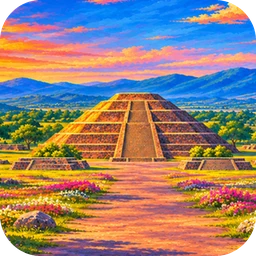
A course has 180 lesson days. A lesson day is one short session built around a real situation: a set of 8 to 12 phrases with English and a pronunciation guide, a grammar tip, listening and speaking drills, a roleplay and a checkpoint. Spaced review brings earlier phrases back when they are due. Every phrase you meet goes into the phrasebook. Each course week has a painted postcard of its place, which fills with colour as you complete the lesson days.
Speaking practice uses your phone’s own on-device voices. Where an offline speech recognizer is installed, the app can give automatic feedback; where there is none, you listen, say the phrase aloud and rate yourself. There is no AI conversation partner and nothing is sent to a server.
Where does the project stand?
Honestly: not finished.
- The course content for all seven languages is drafted.
- Native-speaker review of that content is in progress. Until a reviewer approves a phrase, it does not appear on this website.
- The apps are not yet in the App Store or Google Play. Store buttons on this site say “Coming soon” until they are.
- Prices are set in the stores at launch. Until then this site describes the model (one-time purchase, no subscription) and never a price.
When something changes, the facts page changes first.
What will Roamword not claim?
Roamword will not tell you that you will reach a level in a set number of days. Learning depends on you, on how much you practise and on what you already know. The courses say what they practise each week, in English, on the “what you learn” pages, such as what you learn in Roamword Spanish. The site also carries no ratings, reviews or user counts, because there are none yet.
Seven Roamword courses
Offline lessons, a phrasebook and speaking practice for your trip. The first 14 lesson days are free; one purchase unlocks the rest. No subscription, no account. Coming soon to the App Store and Google Play.
 Spanish
 Italian
 French
 Brazilian Portuguese
 German
 Greek
 Japanese